Unlocking Math Skills with the Rubik's Cube
The Rubik's Cube is more than just a colorful puzzle; it is a powerful tool for enhancing mathematical skills. With its intricate patterns and logical challenges, this iconic cube can help individuals of all ages develop critical thinking, problem-solving abilities, and a deeper understanding of mathematical concepts. In this blog post, we will explore how the Rubik's Cube can unlock math skills, provide practical strategies for using it as a learning tool, and share tips for both beginners and advanced solvers.
Understanding the Connection Between the Rubik's Cube and Math
The Geometry of the Cube
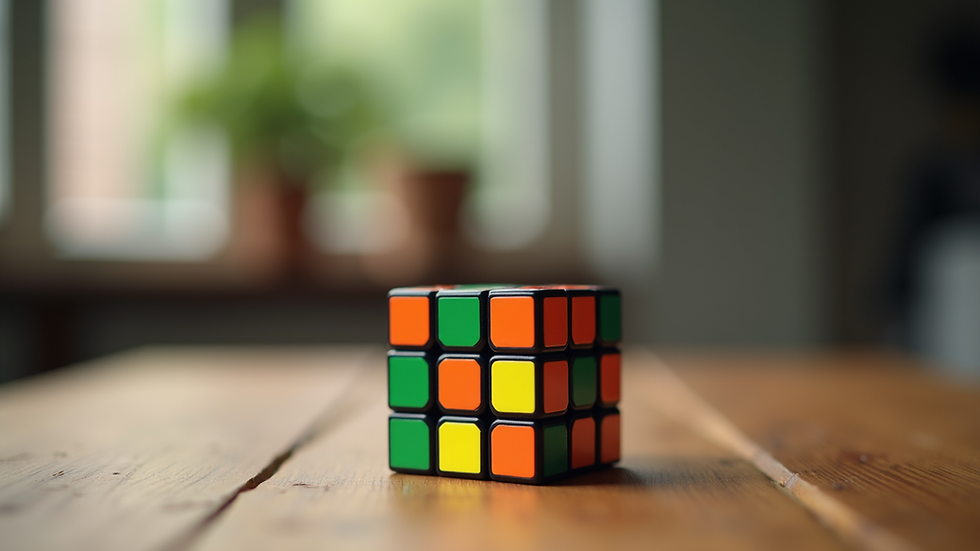
At its core, the Rubik's Cube is a three-dimensional geometric puzzle. Understanding its structure can enhance spatial reasoning skills, which are crucial in mathematics. The cube consists of 26 smaller cubes, known as cubies, which rotate around a central axis. This movement creates a variety of configurations, each requiring logical reasoning to solve.
Patterns and Algorithms
Solving the Rubik's Cube involves recognizing patterns and applying algorithms—sequences of moves that lead to a desired outcome. This process mirrors mathematical problem-solving, where one must identify a pattern, formulate a strategy, and execute it step by step. By practicing with the cube, individuals can improve their ability to think abstractly and apply mathematical concepts in real-world scenarios.
Mathematical Concepts in Action
The Rubik's Cube introduces several mathematical concepts, including:
Permutations: The cube has over 43 quintillion possible configurations, making it a rich subject for studying permutations and combinations.
Group Theory: The movements of the cube can be analyzed using group theory, a branch of abstract algebra that studies the algebraic structures known as groups.
Symmetry: Understanding the symmetrical properties of the cube can enhance one's appreciation for geometry and spatial relationships.
Practical Strategies for Using the Rubik's Cube in Learning
Start with the Basics
For beginners, it is essential to start with the foundational concepts of the Rubik's Cube. Familiarize yourself with the cube's structure, including the different types of pieces (centers, edges, and corners) and their movements. Here are some steps to get started:
Learn the Notation: Familiarize yourself with the notation used to describe moves (e.g., R for right, L for left, U for up).
Understand the Layers: Begin solving the cube layer by layer, starting with the first layer and gradually progressing to the second and third layers.
Practice Algorithms: Memorize a few basic algorithms that can help you solve specific cases, such as the cross or the last layer.
Incorporate Math Challenges
To enhance the learning experience, incorporate math challenges related to the Rubik's Cube. For example:
Calculate the Number of Moves: Challenge students to calculate the minimum number of moves required to solve the cube from a specific configuration.
Explore Probability: Discuss the probability of randomly solving the cube without any prior knowledge of algorithms.
Create Patterns: Encourage students to create their own patterns and explore the mathematical implications of these configurations.
Use Online Resources
There are numerous online resources available to help learners improve their Rubik's Cube skills. Websites, videos, and forums offer tutorials, algorithms, and tips for solvers of all levels. Some popular resources include:
YouTube Tutorials: Channels dedicated to Rubik's Cube solving often provide step-by-step guides for beginners and advanced techniques for experienced solvers.
Online Simulators: Interactive simulators allow users to practice solving the cube virtually, providing instant feedback on their moves.
Community Forums: Engaging with online communities can provide support, motivation, and new strategies for solving the cube.
Advanced Techniques for Experienced Solvers
Speedcubing
For those who have mastered the basics, speedcubing presents an exciting challenge. Speedcubing involves solving the Rubik's Cube as quickly as possible, often in under 10 seconds. This requires not only advanced algorithms but also exceptional hand-eye coordination and practice. Here are some tips for aspiring speedcubers:
Learn Advanced Algorithms: Familiarize yourself with advanced solving methods such as CFOP (Cross, F2L, OLL, PLL) or Roux.
Practice Finger Tricks: Develop finger tricks to execute moves more efficiently and reduce solving time.
Timing Yourself: Use a timer to track your progress and identify areas for improvement.
Competing in Tournaments
Participating in Rubik's Cube competitions can be a thrilling experience. Competitions provide an opportunity to meet fellow enthusiasts, showcase your skills, and learn from others. Here are some steps to get involved:
Find Local Competitions: Search for local or regional competitions through websites like the World Cube Association.
Prepare for the Event: Practice regularly and familiarize yourself with the competition format and rules.
Network with Other Cubers: Engage with other participants to share tips, strategies, and experiences.
The Benefits of Learning with the Rubik's Cube
Enhancing Problem-Solving Skills
The Rubik's Cube encourages critical thinking and problem-solving skills. As individuals work through the challenges of the cube, they learn to approach problems methodically, breaking them down into manageable parts. This skill is transferable to various academic subjects and real-life situations.
Boosting Memory and Concentration
Solving the Rubik's Cube requires memorization of algorithms and patterns, which can enhance memory and concentration. Regular practice can improve cognitive function and mental agility, making it easier to tackle complex mathematical concepts.
Fostering a Growth Mindset
The journey of learning to solve the Rubik's Cube fosters a growth mindset. As individuals encounter challenges and setbacks, they learn the value of perseverance and resilience. This mindset is essential for success in mathematics and other disciplines.
Conclusion
The Rubik's Cube is a multifaceted tool that can unlock math skills and enhance cognitive abilities. By engaging with this colorful puzzle, individuals can develop critical thinking, problem-solving skills, and a deeper understanding of mathematical concepts. Whether you are a beginner or an experienced solver, the Rubik's Cube offers endless opportunities for learning and growth. So, grab a cube, start solving, and discover the mathematical wonders that await!

Comments